

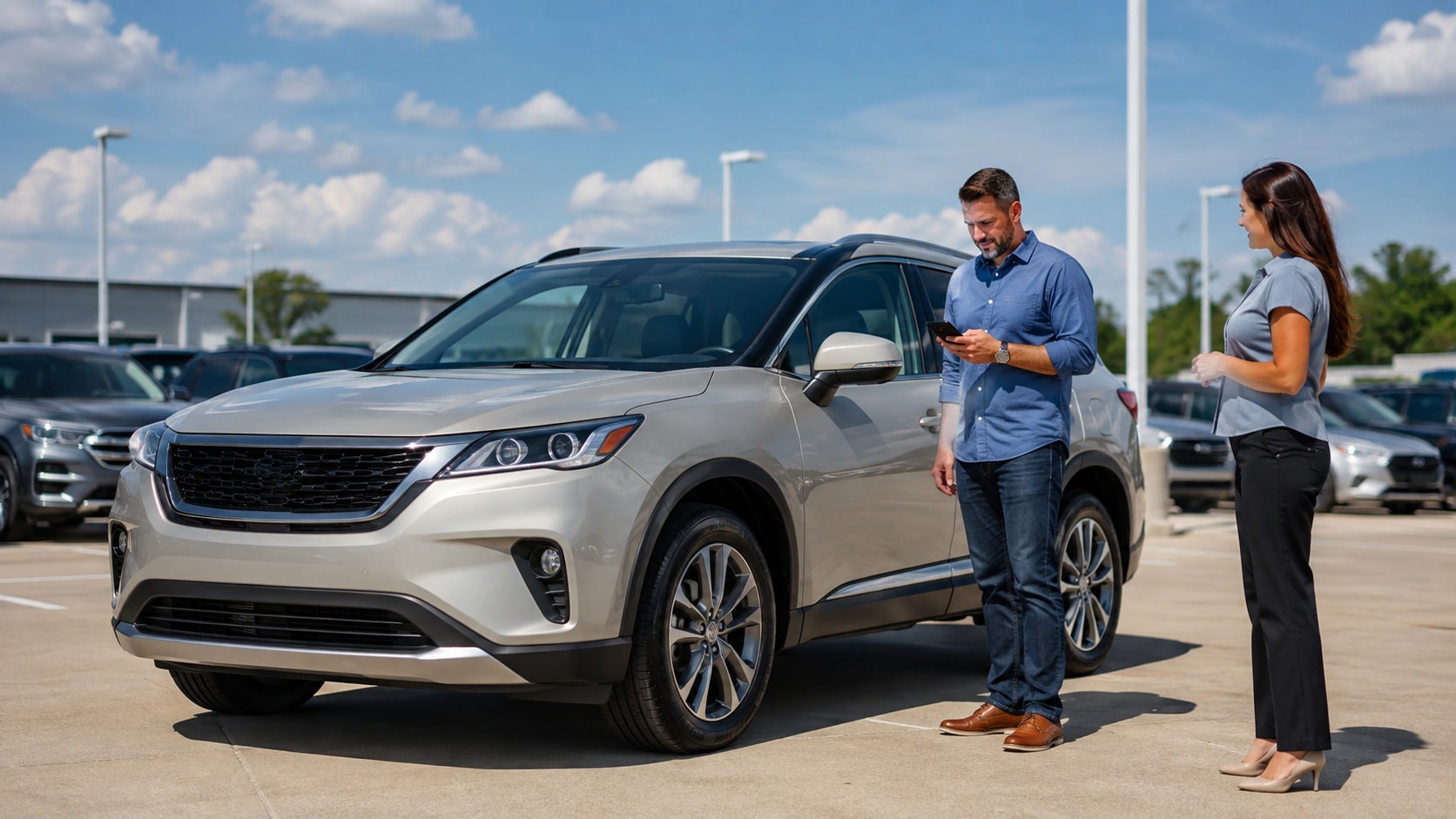
A used car is a good deal when its total value—not just its advertised price—makes sense for its age, mileage, condition, history, equipment, warranty coverage, financing, and expected ownership costs.
The lowest-priced car is not always the best deal. A vehicle that costs slightly more but has been properly inspected, needs less immediate maintenance, includes meaningful warranty coverage, and qualifies for better financing may cost less to own in the long run.
Quick Answer: How Can You Tell If a Used Car Is a Good Deal?
To decide whether a used car is a good deal, compare these seven factors:
- Its price against similar vehicles in your market
- Its mileage, condition, trim, and equipment
- Its title, accident, ownership, and service history
- The results of a physical inspection and test drive
- Any immediate maintenance or repair costs
- The warranty and return terms included with the purchase
- The complete out-the-door price and total cost of financing
If the car is fairly priced, mechanically sound, properly documented, affordable to own, and suited to your needs, it may be a good deal even if it is not the cheapest listing online.
1. Compare the Car With Similar Vehicles
Start by comparing the vehicle with genuinely similar cars—not simply every listing with the same make and model.
The most useful comparisons match as closely as possible on:
- Model year
- Make and model
- Trim level
- Mileage
- Engine and drivetrain
- Major factory packages
- Overall condition
- Accident and title history
- Local market
A higher trim, lower mileage, stronger service history, newer tires, or included warranty can justify a higher price. A vehicle with prior damage, missing maintenance records, worn tires, or needed repairs should generally be evaluated differently from a cleaner example.
Houston pricing can also differ from pricing in another region. Compare vehicles within a reasonable driving distance before relying on a national average.
What Is a Fair Price for a Used Car?
A fair price is one that aligns with comparable local vehicles after accounting for the specific car's mileage, condition, history, equipment, and included benefits. Online valuation tools can provide a useful starting range, but they cannot inspect the actual vehicle or account perfectly for every local-market difference.
Use more than one source, review real listings, and make sure you are comparing the same trim and configuration.
2. Look Beyond the Advertised Price
The advertised price is only one part of the transaction. Ask for the complete out-the-door price so you can see the full cost before financing.
The out-the-door total may include:
- Vehicle price
- Sales tax
- Title and registration charges
- Documentation or administrative fees
- Optional protection products or accessories you choose
- Any credit for your trade-in or down payment
Compare written totals rather than assuming two cars with similar advertised prices will cost the same at signing.
Optional products may provide value for some buyers, but they should be clearly explained. Review what each product covers, what it costs, whether it is optional, and how adding it to a loan changes the amount financed.
3. Evaluate Mileage in Context
Mileage matters, but it does not determine value by itself.
A higher-mileage vehicle with consistent maintenance and responsible use may be a better purchase than a lower-mileage vehicle that was neglected. Likewise, unusually low mileage does not automatically guarantee excellent condition.
Consider:
- The vehicle's age
- Average miles driven per year
- Maintenance records
- Previous commercial, rental, or fleet use
- Interior and exterior wear
- Whether major mileage-based services are due
- How the vehicle drives today
The better question is not simply, “Does this car have too many miles?” It is, “Do the price, condition, history, and maintenance support the mileage shown?”
4. Review the VIN, Title, and Vehicle History
Ask for the Vehicle Identification Number, or VIN, before buying. Use it to review the available title, ownership, accident, mileage, and service information.
A vehicle history report may identify:
- Reported accidents or damage
- Title brands
- Recorded odometer readings
- Number and type of previous owners
- Registration history
- Reported maintenance
- Rental, fleet, or commercial use
No history report is complete enough to replace a physical inspection. Not every accident, repair, or service visit is reported.
Texas buyers can also use the TxDMV Title Check resources to investigate title information. TxDMV recommends checking the title, reviewing available service history, and having a trusted mechanic inspect a used vehicle before purchase.
Does an Accident Mean a Used Car Is a Bad Deal?
Not automatically. The severity, location, repair quality, documentation, current condition, and price adjustment all matter.
A properly repaired minor accident may not prevent a car from being a good purchase. Structural damage, airbag deployment, poor repair work, or missing documentation deserves much closer scrutiny. Ask what happened, who repaired it, and whether an inspection found any remaining concerns.
5. Inspect the Vehicle's Current Condition
A good deal should still be a good car.
Inspect the vehicle in daylight when possible. Look at the body panels from multiple angles and check for uneven gaps, inconsistent paint, overspray, dents, cracked lights, windshield damage, or signs of corrosion.
Inside the vehicle, test:
- Air conditioning and heat
- Windows, locks, mirrors, and seats
- Infotainment and charging ports
- Cameras and parking sensors
- Dashboard warning lights
- Driver-assistance features when equipped
- Every key and remote included with the sale
Under the hood and beneath the vehicle, look for leaks, damaged wiring, corrosion, unusual odors, fresh fluid cleanup, or anything else that deserves professional attention.
Check Carefully for Flood Exposure in Houston
Flood history deserves special attention in the Houston market. Warning signs can include musty odors, water lines, rust in unusual interior areas, debris beneath carpeting, corrosion on electrical connections, condensation inside lights, and electronic features that behave inconsistently.
One clue alone may not prove flood exposure. Combine the title and history review with a detailed physical inspection.
6. Take a Real Test Drive
A quick loop around the parking lot is not enough to evaluate a used car properly.
Whenever possible, drive the vehicle at neighborhood and highway speeds. Test moderate acceleration, braking, steering, parking, tight turns, and reverse operation. Turn the radio down and listen for vibrations, clunks, rattles, grinding, wind noise, or other unusual sounds.
Pay attention to:
- Cold-start behavior
- Engine idle
- Transmission shifts
- Steering alignment
- Brake feel
- Suspension noise
- Temperature gauge
- Warning lights
- Air-conditioning performance
- Visibility and driving position
A car can be mechanically sound and still be the wrong fit. Make sure you are comfortable with its size, controls, ride quality, seating, cargo room, and daily usability.
7. Account for Immediate Maintenance and Repairs
Two similarly priced vehicles may have very different near-term costs.
Check the condition and expected replacement timing of:
- Tires
- Brakes
- Battery
- Engine oil and filters
- Coolant
- Transmission, differential, or transfer-case fluids when applicable
- Belts and hoses
- Spark plugs or timing components when mileage-based service is due
For example, a car priced $1,000 below comparable listings may not be the better deal if it immediately needs tires, brakes, and overdue maintenance totaling several thousand dollars.
Ask for available service records and inspection results. When the condition is uncertain, an independent pre-purchase inspection can help identify issues that are not obvious during a walkaround.
8. Check Safety Recalls
Use the VIN with the NHTSA recall lookup tool to check for open safety recalls. NHTSA states that recall repairs are completed free through the vehicle manufacturer's dealership.
An open recall does not necessarily make a vehicle a bad deal, but you should understand the issue, any manufacturer instructions, and the plan for completing the repair.
9. Understand the Warranty
Warranty coverage changes the value and risk of a used-car purchase.
Federal rules require covered used-car dealers to display a Buyers Guide stating whether the vehicle is sold “as is” or with a warranty. The guide also provides basic warranty information and encourages buyers to get promises in writing. Review the FTC Used Car Buyers Guide requirements and read the actual Buyers Guide on the vehicle before signing.
Ask:
- Is any factory warranty still active?
- Is a dealer limited warranty included?
- Which systems and repairs are covered?
- How long does coverage last?
- Are parts and labor both included?
- Is there a deductible?
- Where can covered repairs be completed?
- Is an optional service contract available?
Do not rely on a verbal promise. Make sure warranty terms and any agreed repairs are documented.
10. Compare Financing by Total Cost, Not Payment Alone
A manageable monthly payment matters, but it does not tell you whether the financing is a good deal.
Compare:
- Amount financed
- Annual percentage rate, or APR
- Loan term
- Monthly payment
- Finance charge
- Total of payments
- Down payment
- Optional products included in the loan
- Any prepayment penalty
A longer loan can reduce the monthly payment while increasing the total interest paid. The Consumer Financial Protection Bureau recommends comparing the APR, loan length, amount financed, and total cost—not only the payment.
Before signing, review the Truth-in-Lending disclosure and confirm that the APR, amount financed, finance charge, total of payments, and monthly payment match the agreement you expect.
Can a Fair-Priced Car Still Be a Bad Deal?
Yes. A car can be fairly priced but become a poor overall deal if the loan has an unnecessarily high APR, the term is excessively long, unwanted products are added, insurance is unaffordable, or the vehicle needs expensive repairs.
The car and the financing should be evaluated separately, then considered together.
11. Estimate the Total Cost of Ownership
Before deciding, estimate what the car will cost after you leave the dealership.
Include:
- Insurance
- Fuel or charging
- Routine maintenance
- Expected repairs
- Tires
- Registration
- Parking or tolls when relevant
- Depreciation and resale value
Get an insurance quote for the specific VIN when possible. Costs can vary significantly between models, trims, engines, and driver profiles.
A vehicle that fits the purchase budget but strains the monthly budget through insurance, fuel, or maintenance is not a good deal for that buyer.
A Simple Used-Car Deal Checklist
Before you buy, confirm that you have:
- Compared the car with similar local listings
- Reviewed the complete out-the-door price
- Evaluated mileage in context
- Checked the VIN, title, and available history
- Inspected the vehicle for damage and flood exposure
- Taken a meaningful test drive
- Reviewed maintenance records and near-term service needs
- Checked for open safety recalls
- Read the Buyers Guide and warranty documents
- Compared APR, term, amount financed, and total payments
- Estimated insurance and ownership costs
- Put every promise in writing
Red Flags That May Signal a Bad Used-Car Deal
Slow down or walk away if:
- The seller will not provide the VIN
- The title information does not match the vehicle or seller
- The price or financing terms change unexpectedly
- You are pressured to focus only on the monthly payment
- Warning lights are on or recently cleared without explanation
- The vehicle shows signs of flood or structural damage
- The history and physical condition do not agree
- The seller refuses a reasonable inspection request
- Promised repairs or warranty terms are not documented
- Optional products appear in the contract without your clear approval
- The final paperwork does not match the deal you discussed
Find a Good Used-Car Deal at CarVibe Houston
At CarVibe Houston, we believe a good deal should make sense beyond the price tag.
Every vehicle is put through a 180-point inspection and includes a complimentary three-month limited warranty as part of the CarVibe Standard. We also believe in pricing transparency, so you can evaluate the vehicle, purchase terms, and financing with a clearer picture of what you are getting.
Explore our current used-car inventory, compare your options, or visit CarVibe Houston for a test drive. Our team can help you review financing options, value your trade, and find a vehicle that fits both your needs and your budget.
Frequently Asked Questions
What makes a used car a good deal?
A used car is a good deal when its price is reasonable for its mileage, condition, history, equipment, and local market—and when its financing and expected ownership costs remain affordable. The cheapest listing is not automatically the best value.
How far below market value should a used car be?
There is no universal percentage. A car priced below comparable vehicles may need repairs, have a different trim, carry more mileage, or have a different history. Compare the exact vehicle and investigate why the price is lower before assuming it is a bargain.
Is low mileage always better when buying a used car?
No. Low mileage can add value, but condition and maintenance are equally important. A regularly serviced higher-mileage car may be a better purchase than a low-mileage car that was neglected or stored improperly.
Should I buy the cheapest used car I can find?
Not necessarily. A slightly more expensive vehicle may be the better deal if it has a stronger history, better condition, newer tires, included warranty coverage, or lower immediate repair costs.
How do I compare two used cars with different prices?
Compare their out-the-door prices, mileage, trim, history, condition, warranty, maintenance needs, insurance costs, and financing. Estimate the first year of ownership rather than comparing sticker prices alone.
Is a used car with an accident history a bad deal?
Not automatically. Consider the severity of the damage, repair quality, documentation, current condition, and price. Structural damage or poorly documented repairs deserve additional caution and professional inspection.
Should I get a pre-purchase inspection from a mechanic?
An independent inspection is a smart step when the vehicle's condition is uncertain, records are incomplete, the car has been modified, or you notice anything unusual during the test drive.
How can financing turn a used car into a bad deal?
A high APR, long loan term, large amount financed, or unwanted add-ons can substantially increase the total cost. Compare the APR, term, finance charge, and total of payments—not only the monthly payment.
What paperwork should I review before buying a used car?
Review the Buyers Guide, vehicle history information, warranty documents, buyer's order, financing agreement, Truth-in-Lending disclosure, optional-product forms, and every written promise before signing.
